I have devoted countless hours exploring the mechanics of online casino platforms, and I know that the phrase “free to play” can mean vastly different things depending on where you click. At Duel Casino, the free-to-play experience is not a simplified afterthought placed in a corner; it is a fully integrated part of the lobby that reflects the real-money environment in almost every respect except the financial risk. My goal here is to guide you through practical, effective strategies for making the most of demo modes and promotional free-play offers so you can build solid competence before you ever risk a cent of your own cash. I want to strip away the marketing fluff and highlight the concrete steps, the hidden limitations, and the smart habits that turn free gaming sessions into a proper training ground for bankroll management, game selection, and strategic timing.
Comprehending the Actual Value of Demo Mode Outside Mere Entertainment
I regularly see players opening a free slot game and turning the reels at maximum speed lacking gathering any useful information, viewing the session as disposable fun rather than a learning laboratory. The real value of demo mode resides in its capacity to uncover a game’s mathematical backbone without the emotional fog that real money generates. When I test a title in free-play mode at Duel Casino, I pay close attention to the occurrence and size of bonus triggers over at least two hundred spins, because that sample size commences to show whether the advertised features are common small teases or rare events reserved for marathon sessions. This is insight you cannot collect from a paytable screenshot. You must to stay with the game and study how the random number generator allocates outcomes in a risk-free setting, letting you build realistic expectations about volatility and feature hit rates before you shift to real stakes.
Beyond mathematics, demo mode enables me to evaluate the user interface and the pace of play free from the stress of a ticking balance. Some games feature elaborate animations that appear immersive for the initial five minutes but become tedious when you are trying to execute a disciplined session, and that lag can quietly affect your decision-making when real money is at stake. I recommend using the free-play environment at Duel Casino to time exactly how long it requires to complete a set number of spins, because a game that executes one spin every three seconds will produce vastly different session dynamics compared to one with lengthy cinematic transitions between rounds. This knowledge directly informs your bankroll planning, as you can estimate how much exposure you are actually generating per hour of play. The demo room is also where I identify games whose bonus-buy features or gamble options suit my preferred risk profile, without time pressure and off the budget.

A frequently underestimated facet of demo play concerns software performance and hardware compatibility testing. I have experienced visually stunning games that result in older mobile devices to overheat or drain the battery at an alarming rate, which is a practical problem you should identify before you are sitting in a real-money session with a phone that suddenly shuts down. At Duel Casino, the platform loads games directly through your browser via HTML5 technology, meaning the demo versions test your internet connection stability and device processing power just as effectively as the paid versions. I always perform a free-play session on the precise device and network I intend to use later, because discovering a latency issue or a touchscreen calibration problem during a demo costs nothing, whereas discovering it during a live wagering round can be an expensive lesson in technical preparedness.
Selecting Payment Options and Its Indirect Impact on Free Gaming Access
At first glance, payment options and no-cost play seem unrelated, but I have learned that the transaction pathways you attach to your Duel Casino account directly influence your access speed to certain promotional free-play stages. Many casinos, including Duel Casino, structure their loyalty and VIP programs so that regular depositors gain priority access to unique free-spin offers, no-wager competitions, and early releases of new game demos that are not yet visible to the general player base. My hands-on suggestion is to select a payment method that supports both rapid deposits and similarly quick withdrawals, because the capability to shift funds seamlessly in both directions builds a transaction history that the platform’s backend can recognize when it distributes personalized free-play bonuses. E-wallets like Skrill and Neteller often process withdrawals within twenty-four hours of approval, while traditional bank transfers can take 3–5 business days, and that speed differential influences how often you can cycle funds and stay noticeable as an active, engaged account.
The deposit minimums and maximums that apply to different payment methods also impact your free-play experimentation secondarily, because they determine the minimum for any deposit-tied bonus you might want to claim. I always confirm whether a particular bonus code functions with the minimum deposit amount of my chosen method, because some promotions demand a deposit slightly higher than the base platform minimum. Cryptocurrency options, where supported, can present deposit limits that are more flexible than fiat methods, and the transaction finality of blockchain payments eliminates the chargeback risk that sometimes causes operators to restrict bonus eligibility for certain traditional payment types. At Duel Casino, I check the banking page regularly because the list of supported methods changes, and a newly added instant-banking service or prepaid voucher system might open a fresh route to claiming a free-spin welcome offer with a deposit amount I find comfortable.
I also need to stress that withdrawal verification procedures, commonly referred to as Know Your Customer checks, have a underlying connection to your free-play eligibility over the long term. An account that undergoes identity verification early, even before a withdrawal is requested, often experiences smoother access to loyalty-linked free-play rewards because the platform has confirmed the account’s legitimacy and can process rewards without compliance friction. I submit my identification documents proactively after registration at casino duel, not because a bonus mandates it immediately, but because I want my account status to be fully verified when a time-sensitive free-spin or free-chips promotion arrives in my inbox. The hours or days used waiting for document review can mean the difference between claiming a weekend-exclusive free-play event and watching it expire, and that practical step costs nothing but a few minutes of document scanning.
Handling the Mental Traps Peculiar to Free-to-Play Gaming
I have seen in my own conduct and in discussions with other users that free-to-play mode brings a certain set of emotional skews that can subtly weaken your real-money results if left unaddressed. The most treacherous trap is the inflation of certainty that stems from securing large demo totals, because the removal of financial consequence takes away the emotional restraint that normally makes you wary. When I rack up a huge virtual win on a high-volatility slot in demo mode, I consciously tell myself that the conclusion was generated under circumstances where the random number generator still operated as usual, but my own interpretation was biased because I had no interest in the loss side of the equation. I offset this bias by periodically checking my demo total after a hundred spins and contrasting it to the theoretical return-to-player figure, which anchors my anticipations in numbers rather than in the excitement of a lucky simulation session that costs nothing to perform.
Another cognitive nuance is the propensity to give up on free-play strategy testing ahead of schedule when the results are dull or the game feels “cold,” which mirrors the restlessness that real-money players go through but with even lower commitment to completing the research. I impose a strict session duration on my free-play experiments: I set a timer for a fixed number of spins or hands, and I do not close the game until the timer ends, regardless of how tedious the session becomes. This practice teaches me to endure the periods of dead spins or losing blackjack hands that are statistically inevitable, and it builds the mental stamina that real-money play demands. At Duel Casino, I employ the platform’s built-in session-tracking tools where present, or I rely on a simple phone timer to enforce this limit, because willpower alone is untrustworthy when the game interface is designed to prompt “just a few more spins.”
The interactive dimension of free-to-play gaming also merits focus, notably in an era where streaming and community features are more integrated into casino platforms. Observing a streamer hit a massive multiplier in a bonus round can generate a powerful urge to duplicate that outcome instantly, and when you transition to demo mode to go after the same game, the free-play format removes the only barrier that would otherwise force you to hesitate and consider the odds. I treat community-driven excitement as a prompt for a research session, not a catalyst for impulsive action. When I notice a game trending on social media or in the Duel Casino lobby leaderboards, I open the demo version not to pursue the viral moment but to methodically note the feature frequency and maximum win potential, so that my eventual real-money engagement is shaped by personal data rather than secondhand adrenaline. This deliberate cooling-off period has protected my bankroll from countless ill-timed buy-ins on games that had already allocated their rare payout events to earlier players.
Exploring Game Categories to Suit Your Free-Play Strategy
The game library at Duel Casino spans several distinct categories, and I think that viewing them as the same during free-play exploration is a tactical mistake that wastes your most important resource: focused attention. Slot machines lead the visual landscape, but within that category exist classic three-reel fruit machines, high-volatility video slots with cascading reels, and progressive jackpot titles whose mechanics differ essentially from standard games. When I access the lobby with a free-play mindset, I organize my sessions by game type rather than by visual theme, because the underlying mathematics and optimal approach vary so significantly between these subcategories. A classic slot with fixed paylines requires a distinct evaluation method than a Megaways title with a dynamic reel structure, and I make notes in a simple spreadsheet to monitor which mechanics I genuinely understand versus which ones I am still decoding.
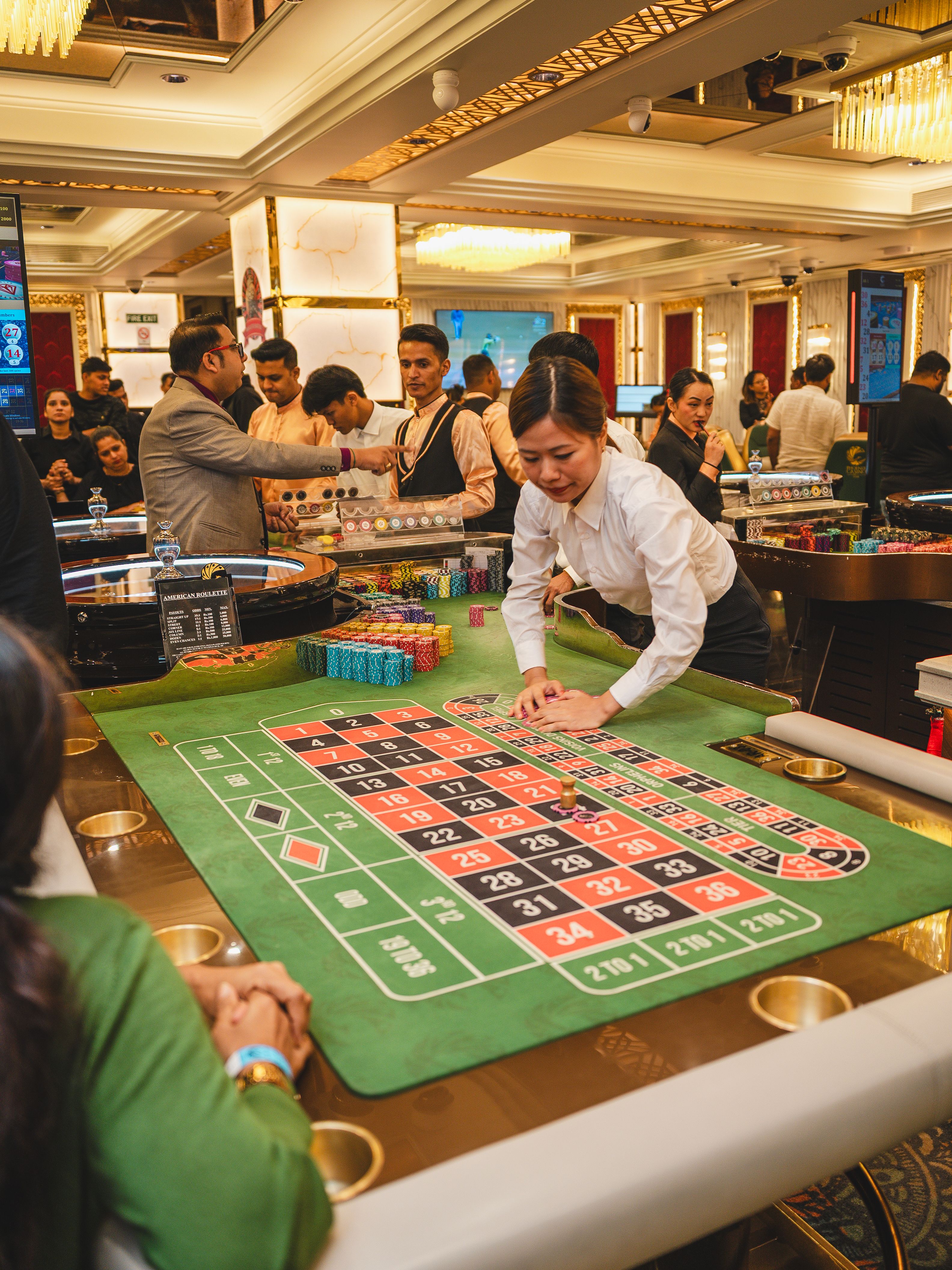
Table-based games provide a different free-play option that I consider severely underutilized by most recreational enthusiasts. The demo versions of blackjack, roulette, and baccarat at Duel Casino allow me to try out betting systems and side-bet approaches without the psychological pain of observing real chips vanish during the acquisition phase. I have devoted entire afternoons in free-play blackjack sessions experimenting with the exact split and double-down decisions that the basic strategy tables dictate, because studying a chart is not the identical as executing the decision swiftly under the timer. The software’s built-in time limits and interface peculiarities become second nature solely via repeated play, and demo mode provides unlimited repetition at zero price. I also employ free-play roulette to monitor the true rate of outside bets landing over hundreds of turns, which grounds my assumptions in factual evidence rather than the gambler’s fallacy that has a tendency to appear when real money is involved.
Real-time casino games usually sit outside the free-to-play framework because the cost of operation of a human dealer and a studio stream cannot be subsidized endlessly, but Duel Casino often provides alternate routes to experience the live environment. I seek limited-time promotional periods where a small batch of free live-dealer chips is granted to active account holders, or for mixed games that combine live-streamed elements with simulated mechanics in a demo-accessible format. When those opportunities arise, I regard them as valuable opportunities to study the dealing pace, the chat interface, and the camera angles before I invest real funds. Even a ten-minute free exposure to a live roulette or live blackjack table from Evolution or Pragmatic Play Live can show me whether the specific table’s dealing speed aligns with my ideal pace, a factor that greatly affects my satisfaction and decision quality during paid sessions.
Bonus Types That Enhance Your Free-Play Gameplay With No Confusing You
I aim to speak plainly about promotion frameworks because the word “free” attached to a casino promotion typically comes with notable strings that are simple to ignore in the excitement of claiming an offer. At Duel Casino, the welcome package commonly offers a deposit match combined with free spins, and while the spins themselves demand no additional cash outlay aside from the qualifying deposit, the winnings they produce are almost always credited as bonus funds governed by wagering requirements. My helpful tip here is to review the bonus terms prior to you spin, not following you have built up a bonus balance that you then are unable to withdraw. I maintain a simple checklist when evaluating any free-spin offer: the eligible game or games, the contribution percentage of those games against the wagering target, the time window for fulfilling the requirement, and the maximum withdrawal cap on winnings derived from the spins. Those four data points instantly tell me whether the free play is actually valuable or simply a glitzy marketing hook with a lottery-ticket probability of yielding returns.
Deposit bonuses and cashback promotions act as a gentler kind of free play, and I view them with a distinct analytical viewpoint than the glitzy welcome deals. A weekly cashback offer that gives back a portion of your net losses as actual, withdrawable cash or as promotional credits with low wagering can fundamentally alter the risk profile of your real-money sessions, practically subsidizing your play. I estimate the actual benefit by estimating my typical weekly volume and including the house edge of the games I choose, which provides me a rough expected return that encompasses the cashback cushion. At Duel Casino, I pay attention on whether cashback is calculated on a “per game category” basis or across the full account, because that difference can mean a notable difference in the refund sum if I divide my activity between slots and table games that carry different theoretical holds for the operator.
One bonus type that I value highly for free-play strategizing is the no-deposit bonus, which periodically emerges as a sign-up incentive or a loyalty bonus drop. Because these promotions require zero financial commitment, they are the most genuine form of free casino play on offer. My recommendation is to treat no-deposit bonuses as a reconnaissance task: I use the free credit to try out game categories I would normally be reluctant to fund with my own deposit, accumulating performance data and personal enjoyment ratings that guide my future deposit decisions. The withdrawal restrictions on no-deposit bonuses are usually stricter, with higher wagering multiples and lower cashout ceilings, so I mentally categorize these offers as research stipends rather than income opportunities. Preserving that psychological framing holds frustration in check when a no-deposit balance unavoidably fails to convert into withdrawable funds, and it maintains the educational value of the session.
Platform and Setup Considerations That Shape Your Free-Play Quality
The device you select for free-to-play gaming at Duel Casino is not a simple aesthetic decision; it immediately influences the precision of the practice data you gather. I have observed that the touch responsiveness and screen size of a mobile phone create a slightly distinct interaction rhythm than a desktop setup with a mouse, and those discrepancies cascade into the speed at which you execute betting decisions. A slot game that I can spin smoothly at four-second intervals on a laptop with a dedicated mouse might slow to five or six seconds per spin on a smartphone where each tap requires more careful finger placement, and over a two-hundred-spin session, that time gap accumulates into a notably varied volume of wagering. I run separate free-play sessions on the device I aim to use for real money, because practicing on a desktop and then switching to mobile for paid play introduces an unbalanced variable that can disrupt my timing and decision flow when the stakes are live.
Browser selection and software updates constitute another layer of practical preparedness that I handle during free-play sessions. Duel Casino’s HTML5-based platform eliminates the need for downloadable apps on most devices, but the performance of the games still fluctuates across Chrome, Safari, Firefox, and Edge browsers, notably when it comes to memory management during extended sessions. I utilize free-play mode to perform a stress test on my preferred browser by keeping a game open for at least an hour, watching whether the frame rate deteriorates or the audio loses sync over time. I also check that my browser’s hardware acceleration settings are optimized for WebGL content, because casino games with complex particle effects and 3D animations depend on that functionality to run smoothly. These technical checks come at no cost during a demo session, but neglecting them before a real-money buy-in can cause a frozen screen during a bonus round, a frustration that is entirely preventable with a small investment of preparatory time.
The difference between mobile and desktop also is important for the group of live casino games that feature restricted free-play or observation modes. When I view a live roulette wheel via a smartphone screen, the stream resolution and the latency present in cellular connections can make it hard to follow the ball’s resting position with the same accuracy that a large desktop monitor provides. I utilize free observation windows to evaluate whether my mobile network’s ping time is consistent enough to handle live betting without the frustrating timeouts that arise when a bet placement registers after the dealer ends the round. If my mobile connection proves unstable during a free observation period, I know to reserve live casino sessions for my home Wi-Fi or wired desktop setup, a choice that a brief free-play test makes clear without costing a single chip in missed bets.
Building a Personal Framework for Moving from Practice to Real Money
After accumulating many sessions of demo experience across the Duel Casino library, the moment comes when you sense ready to transform that practice into real-money action, and I have crafted a transition framework that keeps the knowledge acquired in demo mode from fading under the heat of financial pressure. The first step I take is to reduce my bet size significantly below what my bankroll can hypothetically support, because the psychological impact of even a small loss seems disproportionately larger than a demo loss of any size. I begin my real-money sessions on the exact game I played, with the exact bet level I employed during my final demo session, and I dedicate to at least fifty spins or hands before making any adjustment. This creates continuity between my free-play research and my paid execution, and it indicates whether my decision-making quality holds up when real funds are on the line. Games with bonus-buy features present an additional decision point, because purchasing into a bonus round for a fixed cost in real money is a step that no amount of demo simulation can fully equip you for, and I delay bonus-buy attempts until I have at least several hours of organic real-money play on that title under my belt.
I furthermore implement a strict session stop-loss that emulates the discipline I honed in free-play mode, which sounds paradoxical until you analyze the mechanics. In demo mode, I trained myself to walk away after a set number of spins irrespective of whether the virtual balance was up or down, and that same preset exit point must carry over into real play to maintain the decision-making framework. The dollar amount of the stop-loss matters less than the fact that it exists and is non-negotiable. At Duel Casino, I use the responsible gaming tools to set deposit limits and session reminders that match the boundaries I defined during my free-play research phase, effectively systematizing my commitment so that I do not have to rely on in-the-moment willpower. The platform’s reality-check feature, which displays a session timer at intervals, strengthens the pacing discipline that I practiced in demo mode and bridges the gap between the two environments effectively.
Documentation is the last piece of my conversion framework, and it is the step that the majority of players skip because it comes across like schoolwork rather than amusement. I keep a basic digital log where I record the game title, the date and duration of the real-money session, the starting and ending balance, the number of bonus features triggered, and a one-sentence subjective note about my emotional state during play. This log ties my real-money results back to the free-play data I gathered earlier, and over time it uncovers patterns that no amount of theoretical study can bring to light. Here are the key elements I record in every session log entry:
- Slot name and software provider, so I can evaluate performance across different developers and pinpoint which studios produce games that match my playing style.
- Play date, start time, and total duration in minutes, because I have observed that my decision quality shifts significantly between morning and late-night sessions.
- Initial balance and closing balance, expressed both as a numeric value and as a percentage change, which gives me an unbiased look at my short-term results without the emotional coloring of memory.
- Quantity of bonus features activated and their rough payout amounts, helping me compare actual feature frequency against the expectations I formed during my free-play research phase.
- A one-sentence emotional note recording my state of mind, such as “patient and focused” or “frustrated after three dead sessions,” because patterns in these notes often forecast my future decision quality better than any statistical metric.
This log converts free-play learning from a single educational event into an persistent feedback loop that keeps my play data-driven rather than impulse-driven, and that loop is the key outcome that free-to-play gaming at Duel Casino can deliver to someone who views the platform as a dedicated environment for skill development rather than a pure diversion. The habit of logging these details after every session creates a individual database that grows more valuable with each entry, and when I check it monthly, I can detect trends that would otherwise remain hidden in the day-to-day noise of wins and losses.